
• Recipes
  • Best Coffees
  • Guide
    • South American Coffees
    • African Coffees
    • Indonesian Coffees
  • Contact
menu icon
go to homepage
  • Recipes
  • Best Coffees
  • Guide
    • South American Coffees
    • African Coffees
    • Indonesian Coffees
  • Contact
subscribe
search icon
Homepage link
  • Recipes
  • Best Coffees
  • Guide
    • South American Coffees
    • African Coffees
    • Indonesian Coffees
  • Contact
×
Home

How to make a Latte

Lattes are light and airy espresso-based drinks, topped with frothed milk. With a mix of milk+foam to espresso, they're relatively mild flavored compared to black coffee drinks and tend to taste smooth.

Jump to:
  • Latte vs Cappuccino
  • Coffee
  • Milk
  • Sugar + Flavors
  • Cascara Latte
  • Activated Charcoal Latte
  • Tips

Latte vs Cappuccino

A latte is sometimes known as a Wet Cappuccino.

While most people will get a latte or cappuccino from a specialty coffee shop (and sometimes an automatic vending machine - ew), they can be made at home with the right equipment and some practice.

An Espresso Cappuccino is simply a Cappuccino, denoting that espresso has been used rather than strong-brewed coffee.

Lattes are generally 2 fluid ounces of espresso to 3 fluid ounces of steamed milk and a small foam topping.

Cappuccinos are a 1:1:1 ratio of espresso to milk to foam (eg. 2-oz to 2-oz to 2-oz).
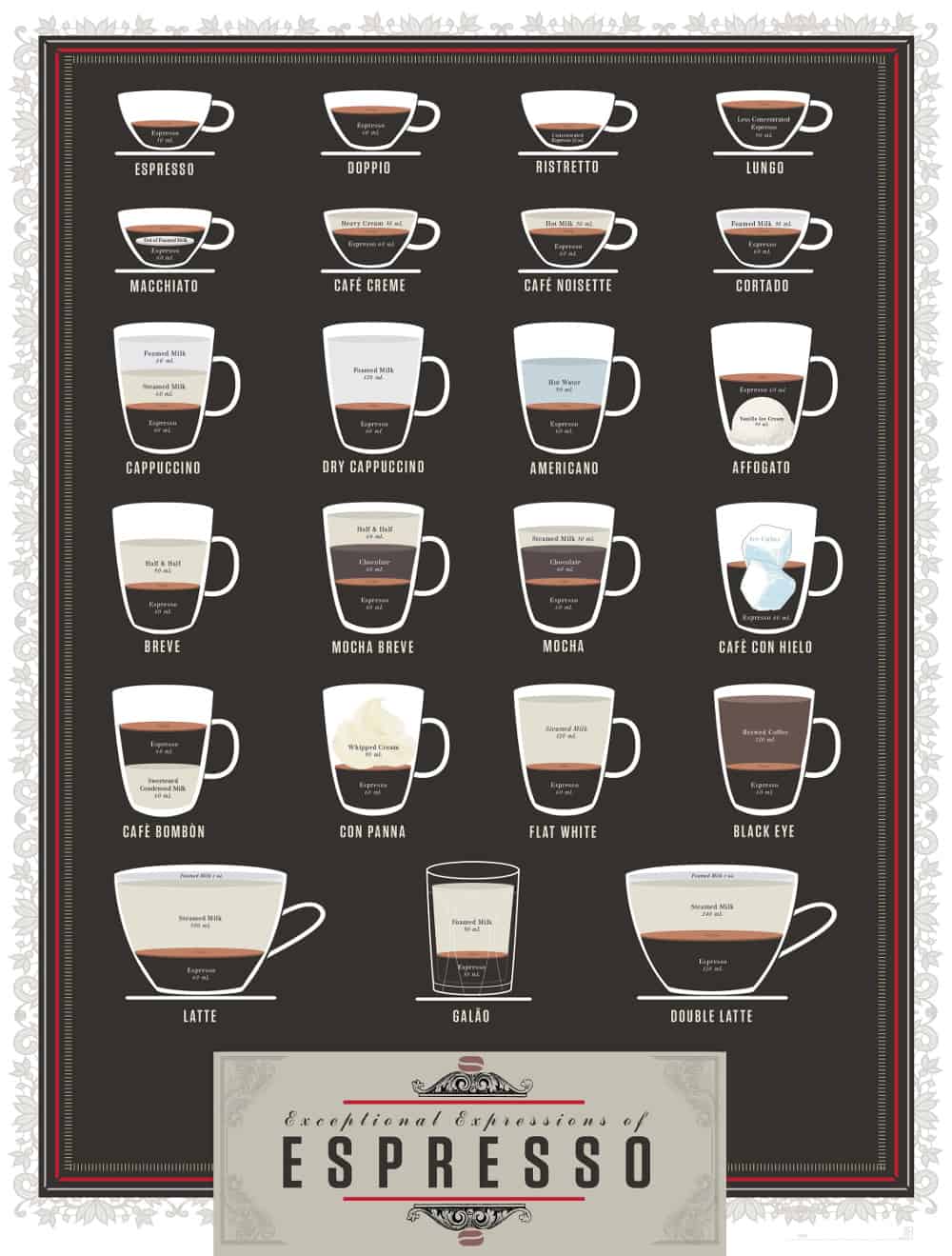
Espresso Field Guide
Espresso Field Guide by OrbitVisual.com

As always, start with a freshly roasted, great espresso bean. This doesn't necessarily have to be a blend from a coffee roaster, if you feel a little adventurous you can try out various single-origin coffees in different roasts. Those who prefer the traditional dark-roasted coffee flavor (rather than single-origin nuances) will still want to get a dark roast.

Submit Your Latte Recipe Here!

Coffee

Your coffee selection will be entirely dependent on your own personal taste. Traditionally, an "Espresso" is used, which technically only refers to the coffee grind (ground for an espresso machine) but commonly just refers to a very dark roasted coffee. With the rise of third-wave coffee roasters, premium light and medium roasts are becoming more popular for use in espresso, and are completely valid. The flavor will vary from a traditional espresso cappuccino with more single-origin flavors shining through, and having a brighter taste thanks to the presence of more coffee acids.

Out Top 3 Best Espresso for Cappuccinos include:

  • Colombian Supremo (for a smooth, mellow drink)
  • Ethiopian Yirgacheffe (for a vibrant, citrus/berry flavor)
  • Sumatra Mandheling (for spicy, earthy flavor)

We recommend going with a darker roast for more traditional coffee flavor, and a medium roast for a more third-wave/gourmet coffee experience.

Make sure and pre-warm the demitasse before you begin brewing the espresso shot(s) for your Cappuccino, or any other specialty espresso coffee drink, or when you are just brewing a straight espresso. This helps to avoid premature cooling of espresso when it comes into contact with the cup. You can also use a very strong-brewed coffee if you don't have access to an espresso machine or to use a stove-top espresso maker.

Milk

Learning to steam and froth milk is probably the step that most aspiring home baristas can practice and work on to get the most improvement out of making their Starbucks-style lattes at home. A high-fat milk is ideal for steaming, or a dairy-alternative that's been specifically formulated for lattes like Pacific Barista Oat Milk.

Make sure the frothed milk reaches a temperature of at least 145º Fahrenheit but avoid a higher temperature as this may burn the milk. You'll want to angle your frothing pitcher so that the steaming wand creates a circular motion with the milk, rotating around the pitcher to get an even steam. The tip should be just under the top of the milk, creating small microfoam bubbles rather than larger ones. It should sound a little like a sizzling grill. To ensure velvety, creamy milk, see the Espresso Coffee Guide section on Steaming and Frothing Milk.

Next allow the milk to rest for just a few moments. This will let the foam rise to the top while the milk remains on the bottom. This will be important for the proper layering of your Latte or Cappuccino.

Side note: You can use milk alternatives such as almond, soy and coconut milk in lieu of regular milk to make a latte. These are especially useful for people who are lactose intolerant or have a dairy sensitivity, but can be a fun experience for anyone. While the products off a grocery store shelf can be used, there are superior products (like those from Pacific Barista) that are specially formulated for steaming and frothing for specialty coffee drinks.

For a cafe-style drink, flavors can even be added to replicate what you get at your favorite coffee shop, including Caramel Macchiatos, Pumpkin Spice Lattes and Peppermint Lattes - all at a fraction of the cost of buying from a cafe.

Sugar + Flavors

Any kind of sugar can be used in a latte, including regular white sugar, demerara, honey, agave and maple syrup. For the most sweetness without flavor, white sugar is the best option.

The sweetness level here is entirely personal, ranging from non at all to candy-like levels. For health reasons, it's best to shoot for as little sweetness as possible while bringing out the flavor of the milk and coffee.

If you are using any flavored syrups for your Latte, make sure to add the flavoring directly to the espresso shot(s) and then stir it very well to ensure that it dissolves properly.

Whether you're using premade syrups from Monin or Torani, both are designed to take the heat of coffee and espresso based drinks without the flavoring components breaking down - but this might not be the case with cheaper flavoring products. On the higher end of the spectrum, organic coffee syrups can add the delicious taste of chocolate, hazelnut and caramel without artificial ingredients.

It should be noted that some flavors are specifically designed to be used with milk-products, in cappuccinos and lattes, to bring out the most flavours. The fats in the milk work to enhance certain flavors that can be easily overwhelmed by a strong espresso, with higher fat content dairy working best.

Looking to cut back on calories in your coffee? Sugar-Free Flavor Syrups are also available, using Sucralose (typically Splenda-brand) as a sweetener instead of sugar. Sucralose is designed to withstand the high heat of coffee drinks without degrading in flavor, and most syrup companies have a well balanced sweetness-to-flavor profile which avoids any artificial aftertaste.

Finally add the steamed and frothed milk to your specialty espresso drink. Then enjoy!

Cappuccinos can also be flavored, but are done less commonly, as they're seen as much of a purist coffee drink.

For step-by-step instructions see our comprehensive list of Espresso Drink Recipes as well as recipes for Espresso Cuisine.

Cascara Latte

Cascara is the dried fruit that surrounds the coffee bean, and has become popular as an alternative to coffee. When brewed it is technically closer to a tea than coffee, however it contains higher levels of caffeine and nutrients. Most brewing instructions are very similar to regular tea - 4-5 minutes with water fresh of a boil - but this would be too weak for a proper cascara latte. We recommend using a lower quantity of water (4 oz) and steeping it longer, up to 15 minutes.

Activated Charcoal Latte

You can add activated charcoal to a latte to make it an activated charcoal latte.

Tips

  • Espresso brewing
  • Pulling A Perfect Espresso Shot
  • Steaming and Frothing Milk

Share to:

  • Facebook
  • X
  • Email

Comments

  1. Mark Stifler says

    August 24, 2017 at 4:01 am

    which one is better?making a coffe latte using latte machine or handmade?

    Reply
  2. Lita Watson says

    July 21, 2017 at 3:17 am

    Thank for sharing! Do you think that the latte machine can make the latte is as good quality as handmade?

    Reply
    • EspressoCoffeeGuide says

      July 26, 2017 at 10:20 am

      Unfortunately "latte machines" typically used a powdered milk product full of artificial ingredients (high fructose corn syrups, etc) that will never come close to a real latte. The best alternative to genuine frothing machine is to microwave milk and use a whisk to whip it.

      Reply

Leave a Reply Cancel reply

Your email address will not be published. Required fields are marked *

Recipe Rating


Welcome!

EspressoCoffeeGuide is your comprehensive guide to the top coffee origins and information on coffee beans

More about me

More Modern Sidebar

  • Sample Page
  • Green Coffee Prices
  • Disclosure
  • Exotic Coffee Beans
  • How Much Caffeine in a Cup of Coffee?
  • EspressoCoffeeGuide Advertising Opportunities
  • White Coffee
  • Products
  • Coffee Flour
  • Collections
  • Flavored Coffee Beans
  • Espresso Beans
  • Green Coffee Beans
  • Coffee Beans
  • How much coffee per cup? Measures and Ratios
  • Coffee
  • Coffee Bar Party Ideas
  • Starbucks
  • How Many Ounces In a Shot of Espresso?
  • Is there a legal limit for caffeine content?
  • Cold Brew Coffee Guide
  • Shipping
  • Caffeine FAQ
  • Caffeine Withdrawal Symptoms and Side Effects
  • Theine vs Caffeine in Tea
  • Caffeine and Metabolism
  • Barista Resume for Coffee Shops (2019)
  • Coffee Plant Facts and Information
  • The Best Coffee Beans in the World
  • Contact
  • Too Much Caffeine? Antidotes and Remedies
  • Coffee Prices
  • About
  • Subscribe
  • Top 10 Most Expensive Coffee Beans in the World
  • What is a Latte?
  • What is a Macchiato?
  • 3 Parts of an Espresso Shot - Body, Heart, Crema
  • What is Quality Coffee?
  • How to Pull a Ristretto Espresso Shot
  • Privacy Policy
  • What is a Moka Pot (Stove Top)?
  • Single Origin Coffee Beans
  • African Coffees
  • Angola Coffee Beans
  • Benin Coffee Beans
  • Burundi Coffee Beans
  • Cameroon Coffee
  • Central African Republic Coffee
  • Equatorial Guinea Coffee Beans
  • Congo Coffee Beans
  • Ethiopian Coffee Beans
  • Ethiopian Djimmah Coffee Beans
  • Ethiopian Harrar Coffee Beans
  • Ethiopian Harrar Longberry Coffee Beans
  • Ethiopian Harrar Mocha Coffee Beans
  • Ethiopian Limu Coffee Beans
  • Ethiopian Sidamo Coffee Beans
  • Ethiopian Yirgacheffe Coffee Beans
  • Ethiopian Coffee Ceremony
  • Gabon Coffee
  • Ghana Coffee
  • Ivory Coast Coffee - Cote D'Ivoire Coffee
  • Kenya Coffee Beans
  • Kenya AA Coffee Beans
  • Kenya Coffee Grading
  • Liberian Coffee - Coffees of Liberia
  • Madagascar Coffee Beans
  • Malawai Coffee Beans
  • Nigerian Coffee Beans
  • Rwanda Coffee Beans
  • Sierra Leone Coffee Beans
  • Tanzania Coffee Beans
  • Tanzania Peaberry Coffee Beans
  • Tanzania Kilimanjaro Coffee
  • Togo Coffee Beans
  • Uganda Coffee Beans
  • Zaire Coffee Beans
  • Yemen Coffee Beans
  • Yemen Mocha Coffee Beans
  • Zambia Coffee Beans
  • Zimbabwe Coffee Beans
  • Indonesian Coffees
  • Australian Coffee Beans
  • Bali Coffee Beans
  • Cambodian Coffee
  • Borneo Coffee Beans
  • Coffee Beans from China
  • Yunnan Coffee Beans
  • Kopi Luwak / Civet Coffee Beans
  • Association of Indonesian Coffee Luwak Farmers
  • Simulated Civet Coffee Beans
  • Brewing Civet Coffee Beans
  • Civet Coffee From Tree to Cup
  • What is Kopi Luwak / Civet Coffee? (part 2)
  • Civet Coffees Around the World
  • Beware of Fake Civet Coffee
  • Jacu Bird Coffee Beans
  • Hawaii Coffee Beans
  • Hawaiian Kona Coffee Beans
  • Hawaii Kona Blend Coffee Beans
  • Oahu Coffee Beans
  • Maui Coffee Beans
  • Maui Coffee at Kaanapali Estates
  • Molokai Coffee Beans
  • Kauai Coffee Beans
  • Hawaii Coffee Grading
  • Hawaii Kona Coffee History
  • Coffee Beans from India
  • India Mysore Coffee Beans
  • Indonesian Coffee Beans
  • Arabica Java Coffee Beans
  • Old Java Coffee Beans
  • Old Brown Java Coffee Beans
  • Old Government Coffee Beans
  • Sulawesi Coffee Beans
  • Sulawesi Toraja Coffee Beans
  • Sumatra Coffee Beans
  • Sumatra Lintong Coffee Beans
  • Sumatra Mandheling Coffee Beans
  • Sumatra Ankola Coffee Beans
  • Kopi Luwak
  • Laos Coffee - Laotian Coffee Beans
  • Malaysian Coffee Beans
  • Mocha Java Coffee Beans
  • Myanmar Coffee - Burma Coffee Beans
  • Nepal Coffee - Nepalese Coffee Beans
  • Himalayan Coffee Beans
  • New Caledonia Coffee
  • Papua New Guinea Coffee Beans (PNG)
  • New Guinea Sigri Coffee Beans
  • Philippine Coffee Beans
  • Sri Lanka Coffee Beans
  • Thai Coffee - Thailand Coffee
  • Timor Coffee Beans
  • Vanuatu Coffee Beans
  • Vietnam Coffee Beans
  • South American Coffees
  • Chilean Coffee Beans
  • Belize Coffee Beans
  • Bolivian Coffee Beans
  • Brazilian Coffee Beans
  • Brazil Cerrado Coffee Beans
  • Cuban Coffee Beans
  • Colombian Coffee Beans
  • Colombian Medellin Supremo Coffee Beans
  • Colombian Excelso and Supremo Coffee Beans
  • Colombian Narino Coffee Beans
  • Costa Rican Coffee Beans
  • Costa Rica Alajuela Coffee Beans
  • Costa Rica Monte Crisol Coffee Beans
  • Costa Rica San Marcos De Tarrazu Coffee Beans
  • Costa Rica Tarrazu Coffee Beans
  • Jamaica Coffee Beans
  • Jamaica Blue Mountain Coffee Beans
  • Dominican Republic Coffee Beans
  • Dominican Republic Bani Coffee Beans
  • Dominican Republic Barahona Coffee Beans
  • Dominican Republic Cibao Altura Coffee Beans
  • Dominican Republic Ocoa Coffee Beans
  • Ecuador Coffee Beans
  • El Salvador Coffee Beans
  • Paraguay Coffee Beans
  • Puerto Rico Coffee
  • Guatemala Coffee Beans
  • Guatemala Antigua
  • Guatemala Coban Coffee Beans
  • Guatemala Huehuetenango Coffee Beans
  • Haiti Coffee Beans
  • Haitian Blue Coffee Beans
  • Honduran Coffee Beans
  • Mexican Coffee Beans
  • Mexican Altura Coatepec Coffee Beans
  • Mexican Capulin Coffee Beans
  • Mexican Chiapas Coffee Beans
  • Mexican Oaxaca Pluma Coffee Beans
  • Mexican Tapachula Coffee Beans
  • Nicaragua Coffee Beans
  • Panama Coffee Beans
  • Panama Geisha Coffee Beans
  • Trinidad and Tobago Coffee Beans
  • Peru Coffee Beans
  • Peru Chanchamayo High Grown Coffee
  • Venezuela Coffee Beans
  • All About Coffee Beans
  • Inspirational Coffee Quotes
  • Calories in a Cup of Coffee
  • DIY Body Coffee Scrub
  • How do you pronounce mate?
  • Why would you put egg shell in coffee?
  • Coffee Plants
  • Typica Coffee Beans
  • Bourbon Coffee Beans
  • Arabica Coffee Beans
  • Robusta Coffee Beans
  • Liberica Coffee Beans
  • Coffee Plant Varietals
  • Selective Breeding
  • Coffee Plant Diseases and Pests
  • Coffee Cherry
  • Peaberry Coffee Beans
  • Harvesting Coffee
  • Coffee Processing Methods
  • What is "Wet Processing" Coffee?
  • What is "Pulped Natural" Coffee Processing?
  • What is "Semi-Washed" Coffee Processing?
  • Grading Coffee
  • Coffee Defects
  • Roasting Green Coffee
  • Light Roast
  • Best Medium Roast Coffees
  • Medium-Dark Roast
  • Best Dark Roast Coffees
  • Home Roasting
  • Coffee Roasters
  • Coffee Packaging
  • How to Make Coffee
  • Best Alcoholic Coffee Cocktail Recipes
  • What is Coffee "Flavor"?
  • What is Coffee "Body"?
  • What is Coffee "Aroma"?
  • What is Coffee "Bitterness"?
  • What is Coffee "Sweetness"?
  • Coffee Cupping - Professional Coffee Tasting
  • Funny Coffee Quotes
  • Coffee Quiz
  • World's Best History of Coffee Timeline
  • Coffee History / Pre-1600
  • Coffee History / 1600-1650
  • Coffee History / 1650-1700
  • Coffee History / 1700-1750
  • Coffee History / 1750-1800
  • Coffee History / 1800-1850
  • Coffee History / 1850-1900
  • Coffee History / 1900-1950
  • Coffee History / 1950-Present
  • Bird Friendly Coffee Beans
  • The Best Coffee Makers (2019)
  • Vacuum Coffee Maker
  • Coffee Percolator
  • How To Clean a Coffee Maker
  • Automatic Drip Coffee Makers
  • Single Serve Coffee Makers
  • Pod Coffee Makers
  • Coffee Pods
  • Keurig K-Cups
  • Best K-Cup Coffees
  • T-Discs (Tassimo Coffee Pods)
  • French Press Coffee
  • Coffee Containers
  • Low Acid Coffee
  • What is Espresso?
  • Espresso Coffee
  • Espresso Beans
  • How to Make Espresso
  • Espresso Blonding, Channeling, Tiger Striping
  • Grinding Coffee For Espresso
  • Espresso Tampers
  • Espresso Technical Specifications
  • Espresso Crema
  • How to Pull an Espresso Shot
  • Steaming and Frothing Milk
  • Espresso Drink Recipes
  • How To Make Irish Coffee (Cafe Irlandes)
  • How to Make a Vietnamese Coconut Egg Coffee
  • How to make a Black Russian (Recipe)
  • How to make an Espresso Daiquiri Cocktail (Recipe)
  • How to make a Flying Frenchman Cocktail (Recipe)
  • How to make a Carajillo Spanish Coffee (Recipe)
  • Iced Coffee Recipes
  • How to Make a Cafecito / Cuban Coffee
  • Submit Your Coffee Recipe
  • How to Make a Cafe Bombon (Recipe)
  • How to Make a Cafe Con Leche (Recipe)
  • How to Make Espresso con Panna (Recipe)
  • Activated Charcoal Latte Recipe
  • How to Make an Espresso Float
  • Italian Soda
  • Turkish Coffee Recipe
  • Best Espresso Machines (2019)
  • The Best Saeco Home Espresso Machine (2018)
  • Pod Espresso Machines
  • ESE Pods - Easy Serving Espresso Pods
  • Home Espresso Machines
  • Prosumer Espresso Machines
  • Commercial Espresso Machines
  • Piston-Driven Espresso Machines
  • Pump-Driven Espresso Machines
  • Steam-Driven Espresso Machines
  • Air-Pump Espresso Machines
  • Automatic Espresso Machines
  • Super-Automatic Espresso Machines
  • Shade-Grown Coffee Beans
  • Coffee Grinders
  • Baratza Coffee Grinder
  • Burr Coffee Grinders
  • Conical Burr Grinders
  • Blade Coffee Grinders
  • Organic Coffee Beans
  • Instant Coffee
  • Freeze-Dried Coffee
  • History of Instant Coffee
  • Decaffeinated Coffee Beans
  • Direct Contact Method of Decaffeination
  • Indirect Contact Method of Decaffeination
  • Carbon Dioxide Method (CO2) of Decaffeination
  • Swiss Water Process of Decaffeination
  • Fair Trade Coffee Beans
  • Coffee Terms
  • Strictly High Grown Coffee
  • Coffee Terms - A
  • Coffee Terms - B
  • Coffee Terms - C (Part 1)
  • Coffee Terms - C (Part 2)
  • Coffee Terms - D
  • Coffee Terms - E
  • Coffee Terms - F
  • Coffee Terms - G
  • Coffee Terms - H
  • Coffee Terms - I
  • Coffee Terms - J
  • Coffee Terms - K
  • Coffee Terms - L
  • Coffee Terms - M
  • Coffee Terms - N
  • Coffee Terms - O
  • Coffee Terms - P
  • Coffee Terms - Q
  • Coffee Terms - R
  • Coffee Terms - S
  • Coffee Terms - T
  • Coffee Terms - U
  • Coffee Terms - V
  • Coffee Terms - W
  • Coffee Terms - X
  • Coffee Terms - Y
  • Coffee Terms - Z
  • How to make a Latte
  • Useful Resources
  • Coffee Production Volumes 2008 - 2013
  • Coffee Crop Years
  • Organic and Fair Trade Organizations

Guide to the Top Coffees

  • Kenya Coffee Beans
  • Sulawesi Coffee Beans
  • Yirgacheffe Coffee Beans
  • Sumatra Coffee Beans
  • Harrar Coffee Beans
  • Costa Rican Coffee Beans
  • Brazilian Coffee Beans
  • Mocha Java Coffee Beans
  • Tanzania Coffee Beans
  • Guatemala Coffee Beans
  • Ethiopian Coffee Beans
  • Colombian Coffee Beans
  • Honduran Coffee Beans
  • Hawaiian Kona Coffee Beans
  • Geisha Coffee Beans
  • Espresso Beans
  • Best Coffee Beans

Popular

  • Turmeric Latte
  • Coffee Cake Muffins
  • Dirty Chai Latte
  • a cup of chicory coffee with chicory flowers beside it
    Chicory Coffee

Footer

back to top

ABOUT ESPRESSOCOFFEEGUIDE.COM

Find out more About us and what we're doing.

Information is pulled from a number of locations including official sources ICO, SCA, as well as proprietary third party databases. Beginning circa 2006, we've compiled data and written about coffee and continue to revise and add as new sources come to light. If you have any recommendations or suggested revisions please contact us!

Information on single origins is updated over time and only reflects the data we have at the time of writing on current crops. All product names, logos, and brands are property of their respective owners. EspressoCoffeeGuide.com reserves the right to all its own content.

COLLABORATE WITH US

We're always looking to team up with individuals and companies doing awesome things in the coffee industry. If you'd like to contribute please reach out to us with a proposal!

Contact us

Privacy Policy

Disclosure: We may earn commission at no cost to you from some links on this website. However, the content, opinions and analysis are 100% objective and editorial objectivity is our priority.

Copyright © 2025 EspressoCoffeeGuide