
A coffee cherry is the fruit, or berry of the coffee tree, growing in clusters along the plant's short stems. It is the sole ingredient in coffee flour.
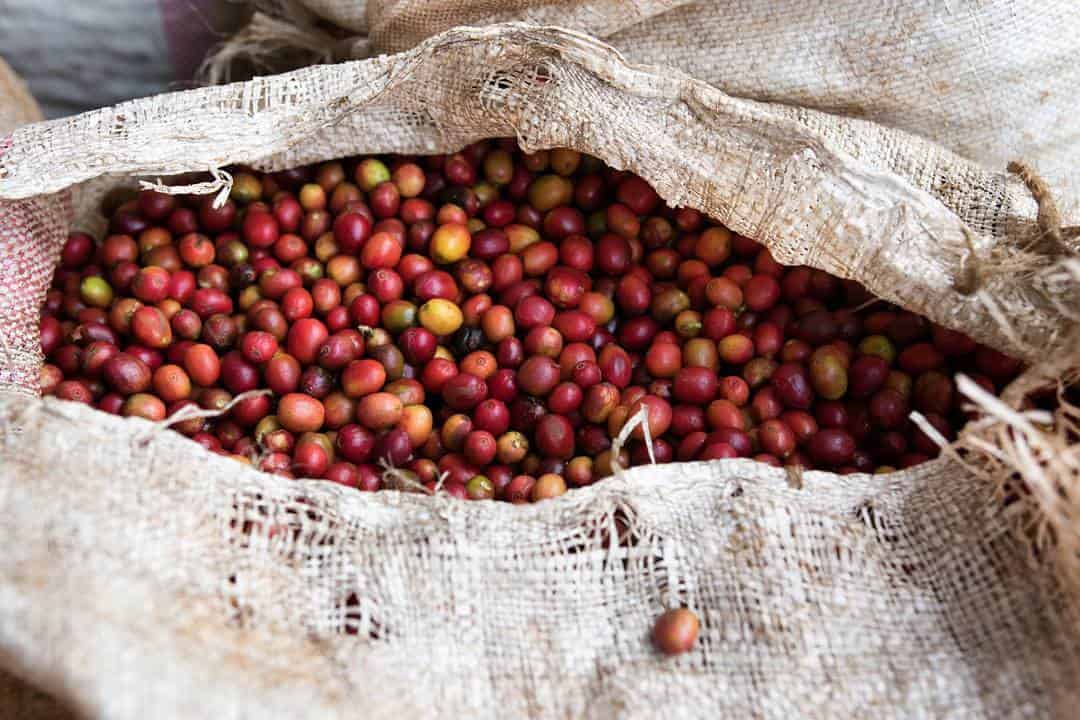
Description of a Coffee Cherry
A coffee cherry typically measures about 6/10-inch (1.5 cm) long and begins as a light green, unripe berry that gradually ripens to yellow and then takes on an orange/crimson color before turning dark cherry-red/reddish-black, at which time the fruit is ready to be harvested for the prized green coffee beans.
Coffee Flour
Coffee flour is made from the coffee cherry - typically considered a waste product with no market value. It's rich in nutrients and anti-oxidants and can be used as a partial substitute for traditional flour, and contains large amounts of caffeine!
Determining When the Coffee is Ripe
The whole ripening process of the coffee cherry takes about seven to eight months, and the ripeness is determined largely by color.
A more precise method of determining optimum ripeness involves gently squeezing the fruit to see if the seed (coffee bean) will easily fall out. Typically this happens just before the fruit is completely red (monochromatic).
Some coffee plant varietals (e.g. botanical varieties) have cherry (fruits) that turn yellow rather than red when they are ripe.
Anatomy of a Coffee Cherry
Beneath the coffee cherry's outer skin (the exocarp) is the fruity pulp (the mesocarp), and then the silverskin (endocarp), a fine, extremely thin layer of skin that surrounds and adheres tightly to the green coffee bean.
The dried coffee cherry is typically discarded or used as a fertilizer, but recently it can be found and as "Cascara" - a tea made from coffee cherries! It's brewed similar to a tea, and is the primary ingredient in a cascara latte.
For tips on making great espresso drinks see Pulling A Perfect Espresso Shot and How to make Lattes and Cappuccinos.
Anonymous says
This coffee cherry is the optimal product for its use as the main ingredient for the preparation of various beverages. It gives a good taste to them.
Trudy H. says
Where can I buy coffee flour and what kind of recipes is it used in? Can I make muffins with it and get extra caffeine?
Robert says
Love Oliang, or Thai Iced coffee, no cream...but I swear it has little or no caffein. I sleep well after having a big glass with a traditional Thai dinner....anyone know the caffein content?
Philip Riersgard says
How many pounds of coffee cherry per bushel? In other words, what is the density of the coffee cherry?
tran says
Boil a liter of milk (or water, like in ancient Mexican style. Like water for chocolate, "Como agua para chocolate": you know).When the milk is warm (not hot) add a chocolate pie in pieces. Stir with a blender (but be careful! the blender's electric cord should NOT touch the pot or any other hot thing around it).When the chocolate has dissolved add 1/2-3/4 cups of sugar (depending how sweet you like your chocolate) and blend in fast. Make sure the sugar is completely dissolved in the chocolate otherwise it would be bitter no matter how much sugar you may add afterwards.Add a teaspoon of cinnamon or natural vanilla flavour (artificial vanilla flavour with chocolate results in an awful medicine like flavour) if you like, and blend again.Let the mixture boil, when it starts to get bubbly quickly remove the pan from the stove top, and rest the bottom against a soaked cloth. Put again on stove top, it should get bubbly almost immediately, remove once again and repeat one last time. This aerates the chocolate which enhances flavour.In a mug, put about 1/2-3/4 of the chocolate mixture, and add cold milk, until the temperature and/or the concentration of the flavour is right for your tastes. Accompany with French Pastries. Yum Yum