
A coffee processing method which involves "washing" the green coffee beans to remove the coffee's fruity material while the coffee cherry is still moist (e.g., just after picking).
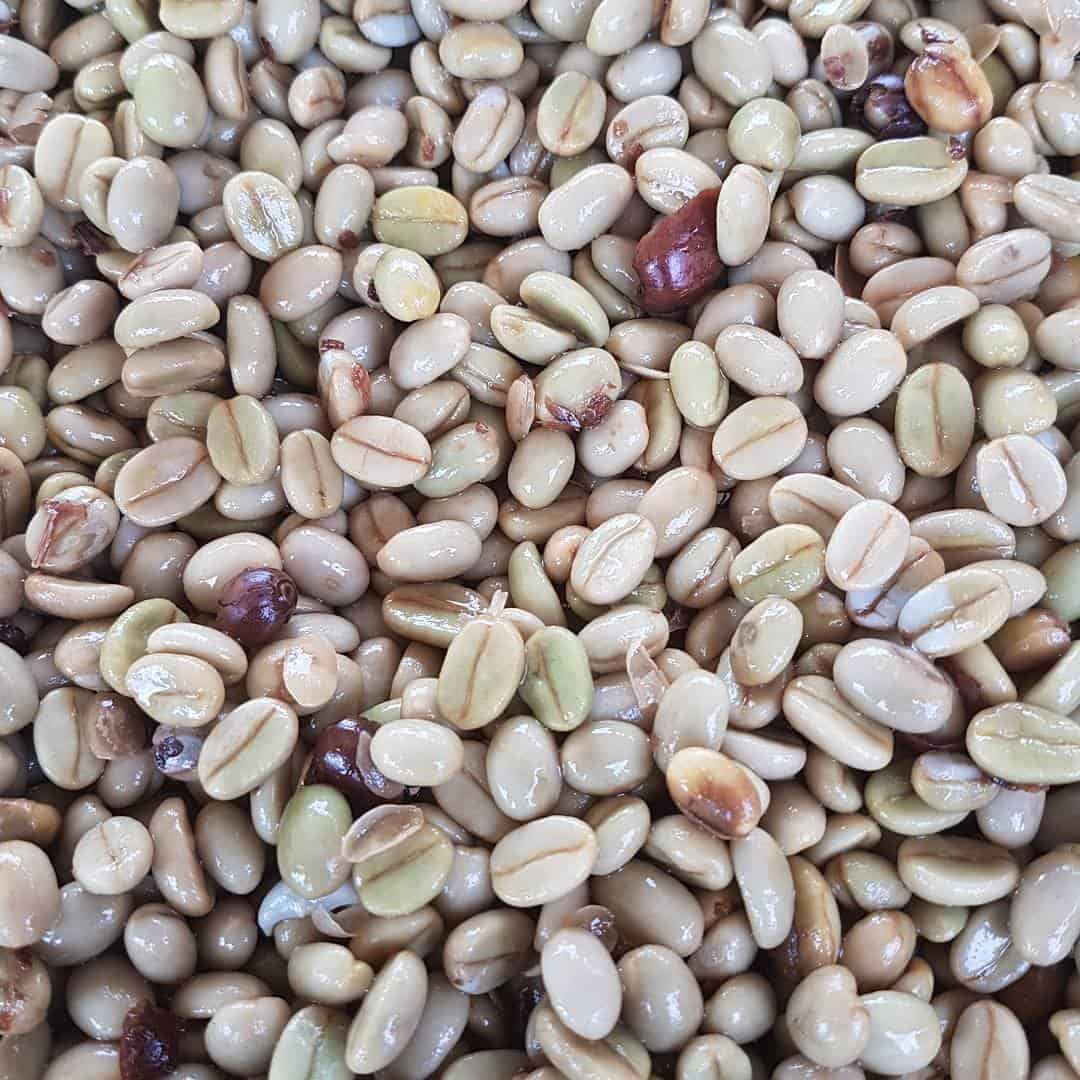
The picture above shows a fully washed coffee, after being passed through a pulping machine. This is now ready to go through fermenting, washing, grading and drying before being hand-sorted (graded) for sale.
Removing the Parchment and Mucilage
More specifically, wet processing is a method of getting the parchment off the coffee cherry (fruit) by first removing the pulp from the green coffee inside.
Next the coffee cherry's mucilage is removed through fermentation, and finally the beans are dried, either in the sunlight or using forced-air drying, to achieve a final moisture content of about 10.5%.
Characteristics of a Wet Processed Coffee
Wet processing in general is said to produce a clean taste in the cup of brewed coffee, and also helps to ensure a shining, bright acidity. One undesirable effect of wet processing, however, is that it causes the coffee to lose much of its body.
Pulping and Fermentation
Wet method processing usually involves placing the beans into water for softening and then mechanically de-pulping the beans using a pulper. Next the coffee beans are placed into a fermentation tank to remove the mucilage.
The length of time that the beans are left in the fermentation tank - usually from 8 to 24 hours - depends on various factors including the temperature and elevation, of the site. At lower elevations it only takes about 12 hours in the fermentation tank, but at higher elevations it may take 24 hours.
Rinsing and Sun-Drying the Coffee Beans
After the coffee beans are washed (flushed) again with clean, fresh water they are dried either out in the open (see Sun-Drying) or in large, heated rotating cylinders in mechanical dryers (see Drying). Sun drying is preferred in climates with predictable sun and weather patterns, as it requires no investment in mechanical equipment. The downside that has to be factored in is rain, so climates with consistent seasons that don't rain at certain times are more ideal than others.
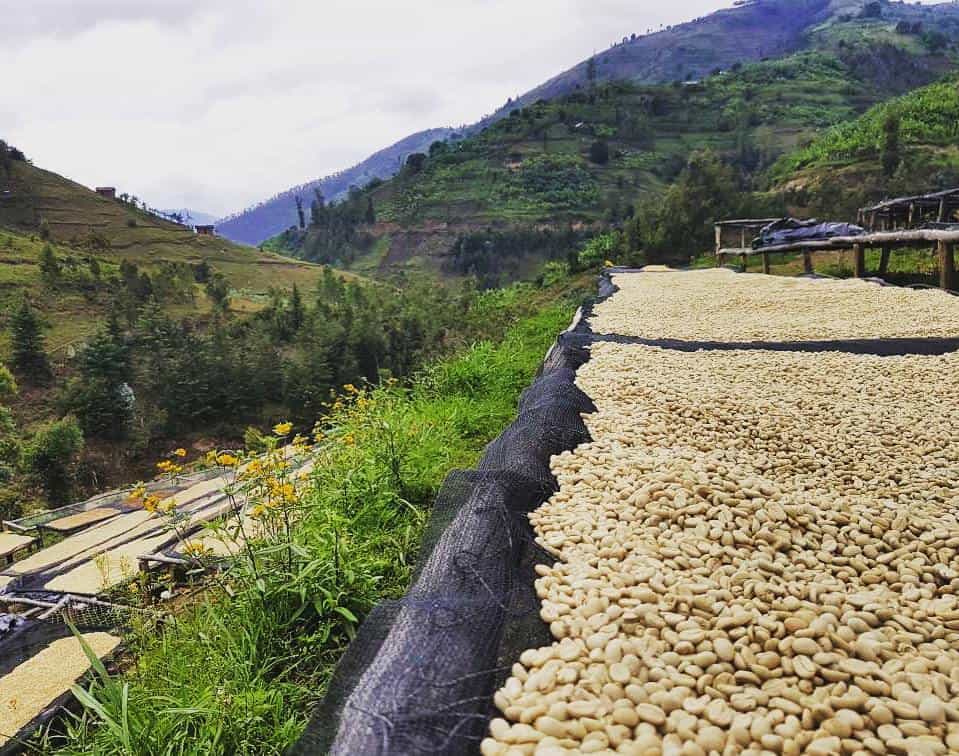
Green Coffee Beans
After a coffee crop is processed and then sorted and grades, most of the coffee beans are usually bagged in 132 or 154 pound coffee sacks which are in turn sold on the world market as green coffee beans (milled though not yet roasted).
Selective Picking for Wet Method Processing
Wet processing is typically used on green coffee that are selectively picked (only the ripest coffee cherry are picked), and not on coffee beans which have been strip-picked (all of the coffee cherry are picked off a branch at the same time).
Wet method processing is also known as the washed method, and is commonly used for top premium coffees.
Coffee and Espresso Brewing Tips
For tips on brewing the perfect cup of coffee see our section on coffee brewing. You can also read detailed coffee flavor profiles of gourmet coffee and instructions on preparing Espresso Drink Recipes.
For step-by-step instructions see Pulling A Perfect Espresso Shot as well as How to make Lattes and Cappuccinos.
Remon Habib says
Is it possible to buy from Egypt?